
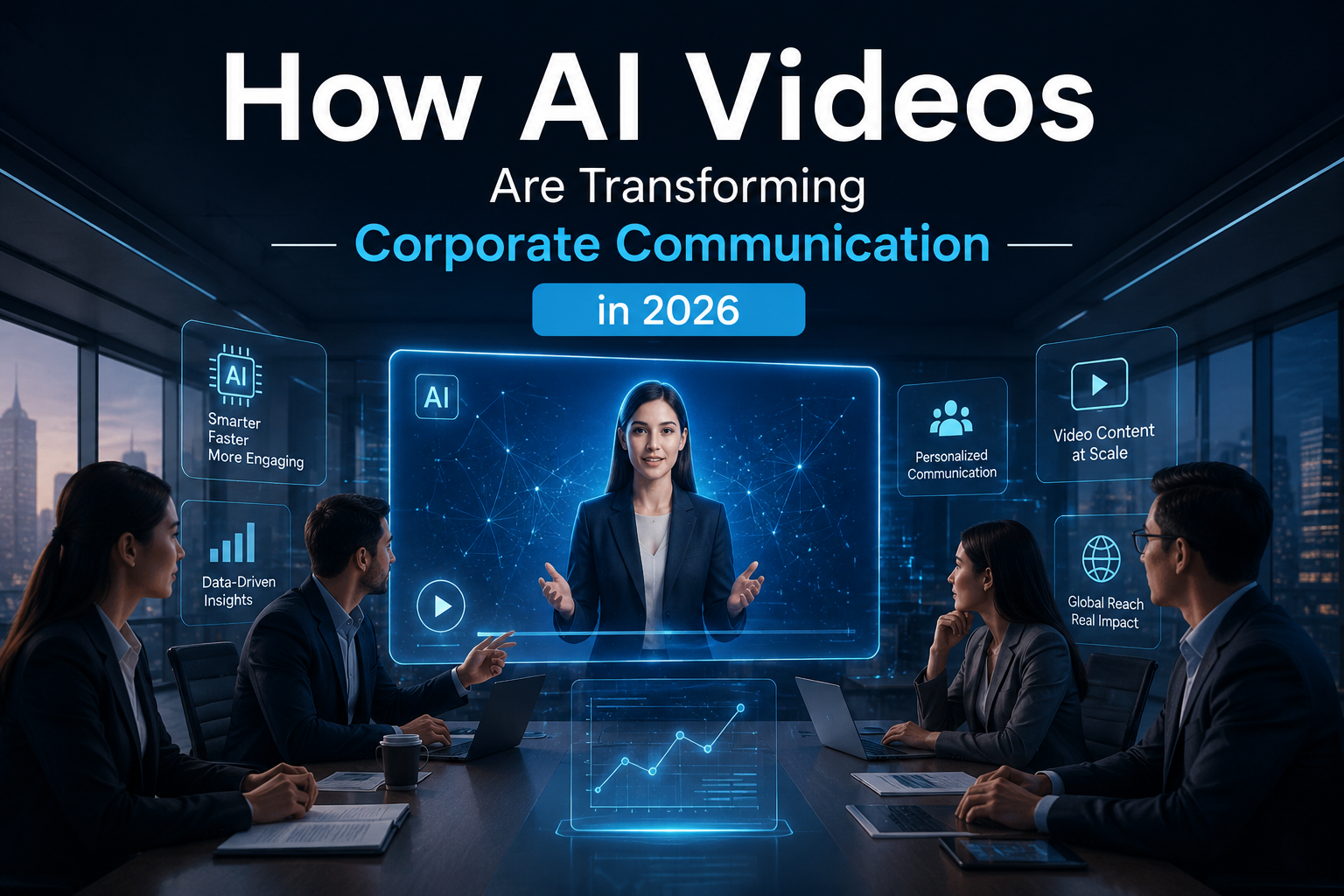
How AI Videos Are Transforming Corporate Communication in 2026
Corporate communication used to mean a slide deck, a memo, or — if the budget allowed — a full-day shoot with a crew, a script, and a lot of retakes. That’s changing fast. In 2026, AI-assisted video production has moved from novelty to a genuine tool in the corporate video toolkit, and companies that understand *where* it fits are getting faster turnarounds without sacrificing quality.
At Konnect Me Video, we use AI as a tool inside a human-led production process — not as a replacement for it. Here’s what that actually looks like, and what it means for your next corporate video project.
What "AI Video" Actually Means Right Now
There’s a lot of noise around “AI-generated video,” and most of it oversells what’s realistic for corporate use. In practice, AI is showing up in corporate video production in a few specific, useful ways:
AI-assisted scripting — generating first drafts, tightening messaging, and speeding up the ideation phase before a human writer refines the final script.
AI voiceover and localization — producing natural-sounding narration in multiple languages quickly, which is especially useful for companies with regional or global audiences.
AI-powered editing tools — automated rough cuts, scene detection, and asset organization that speed up post-production without touching creative decisions.
3D and motion graphics acceleration — AI tools that speed up asset generation, texturing, and animation cycles for product and industrial explainer videos.
What AI is not doing well yet — at least not for serious B2B and industrial communication — is replacing thoughtful direction, brand-accurate visual storytelling, and the judgment needed to explain a complex product or safety process correctly. That still takes a human production team that understands your industry.
Why This Matters for Corporate Communication
Corporate communication in 2026 has to move faster than ever. Product launches, safety updates, investor communications, and internal training all compete for attention, and video remains the format that holds it best. AI tools are compressing the time between “we need a video” and “the video is ready,” which means:
Faster turnaround on routine content — internal updates, quick explainers, and localized versions of existing videos.
Lower cost for iteration — testing different scripts or voiceover styles before committing to a final production.
More consistent output at scale — especially useful for companies producing training content across multiple regions or languages.
Where Human Expertise Still Wins
For anything that represents your brand externally — corporate films, product launch videos, investor-facing content, safety training that needs to be genuinely clear and compliant — the craft still matters. A pump manufacturer explaining a technical specification, or a safety video meant to actually change behavior on a factory floor, needs direction, pacing, and visual clarity that AI tools alone can’t reliably produce yet.
This is where a studio with real industrial and B2B experience — the kind built over years of working with manufacturing, industrial, and enterprise clients — makes the difference between a video that looks fine and one that actually works.
The Practical Takeaway
If you’re planning corporate video for 2026, the smart approach isn’t “AI or human production” — it’s knowing which parts of the process benefit from AI-assisted speed and which parts need experienced human judgment. A good production partner will already have that worked out, so you get faster delivery without losing the quality your brand and your audience expect.
Looking to produce corporate videos that combine modern efficiency with real production expertise? [Get in touch with Konnect Me Video](https://konnectme.video) to talk through your next project.
-
 10 Reasons Every Manufacturing Company Needs Product Videos
 -
 How AI Videos Are Transforming Corporate Communication in 2026
 -
 The benefits of using 3D animation for your business.
 -
 How Videos Improve Training Engagement
 -
 Learn how to boost B2B strategy with animated videos
 -
 How Animated Videos Help Save Paper and Promote Sustainability
 -
 Mastering the Art of Memes and GIFs: A Playful Guide to Effective Marketing
 -
 How to use video to drive traffic to your website